Composting
Composting
Indonesia is known as agricultural country. However, Indonesia has developed and become an industrial country. This fact can be proofed by the quantity of industry compared to agriculture land which Indonesia has. On the other hand, the waste from the agricultural field can still be found and remains unprocessed. There are a lot of ways to solve this problem, one of them is composting. There are three most commonly used composting method. Those are vermicompost, aerobic and organic liquid.
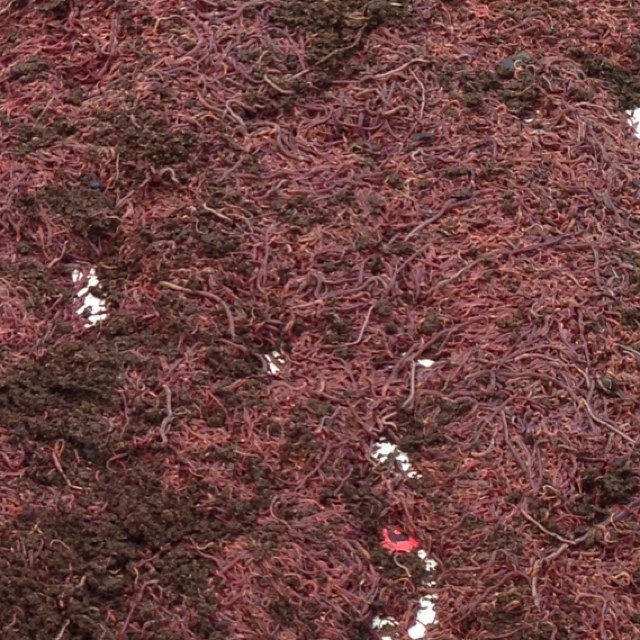
First, vermicompost is a fertilizer which is derived from worm dung (Sutanto, 2002). This method concluded as easy method because it has only a few thing to control. It only needs to maintain the worms in a particular waste to breed as well as decomposing organic waste to produce dirt. From there, the mix of dirt and worm will transform to a mixture which contains the feces. It can be used as organic fertilizer that has a high aeration level. For the species of worm, Lumbricus terestris and Eisenia hortensis can be used as vermicompost (Rukmana, 1999).
 |
| Vermicompost |
Second, aerobic composting is composting through a biochemical process in which oxygen is involved. Generally, the main raw materials are from plant and animal waste (or a mixture of both). While in the making of compost, it will take times which is about 40-50 days depending on the type of decomposer and raw material of fertilizer (Suryati, 2014).
 |
| Aerobic composting |
Last one, liquid composting is a fertilizer which made from a wet composting process. It may take place in aerobic or anaerobic. Some of the farmers infer that liquid organic fertilizer is more easily absorbed by plants, thus it is very effective for growth and productivity. As a note, the dose must be adjusted because it has a risk to kill the plant (Hadisuwito, 2007).
 |
| Liquid composting |
From the three types of fertilizers mentioned above, the selection of fertilizers may be adjusted from the usage. All of these types of fertilizers are classified as natural fertilizer which has advantage and disadvantage. Natural fertilizer has a complete nutrient both micro and macro nutrient which cannot be found in inorganic fertilizer. Natural fertilizer is also safer for the environment compared to inorganic fertilizer (Parnata, 2004). Nevertheless, natural fertilizer has a very little amount of nutrient. Thus, the fertilization with inorganic fertilizer may show a bigger and more successful result (Sutanto, 2002).
Sources:
Hadisuwito, S. 2007. Membuat Pupuk Kompos Cair. Jakarta: Agromedia Pustaka.
Parnata, A. S. 2004. Pupuk Organik Cair: Aplikasi dan Manfaatnya. Jakarta: Agromedia Pustaka.
Rukmana, R. 1999. Budi Daya Cacing Tanah. Yogyakarta: Kanisius.
Suryati, T. 2014. Bebas Sampah dari Rumah: Cara Bijak Mengolah Sampah Menjadi Kompos dan Pupuk Cair. Jakarta: Agromedia Pustaka
Sutanto, R. 2002. Pertanian Organik: Menuju Pertanian Alternatif dan Berkelanjutan. Yogyakarta: Kanisius.
Group 1
1. Bayyinah Rizki Amalia Suhadi (081411131037)
2. Muhammad Gibran Hawwari (081411133001)
3. Ruby Silica Putri (081411133001)
Comments
Post a Comment